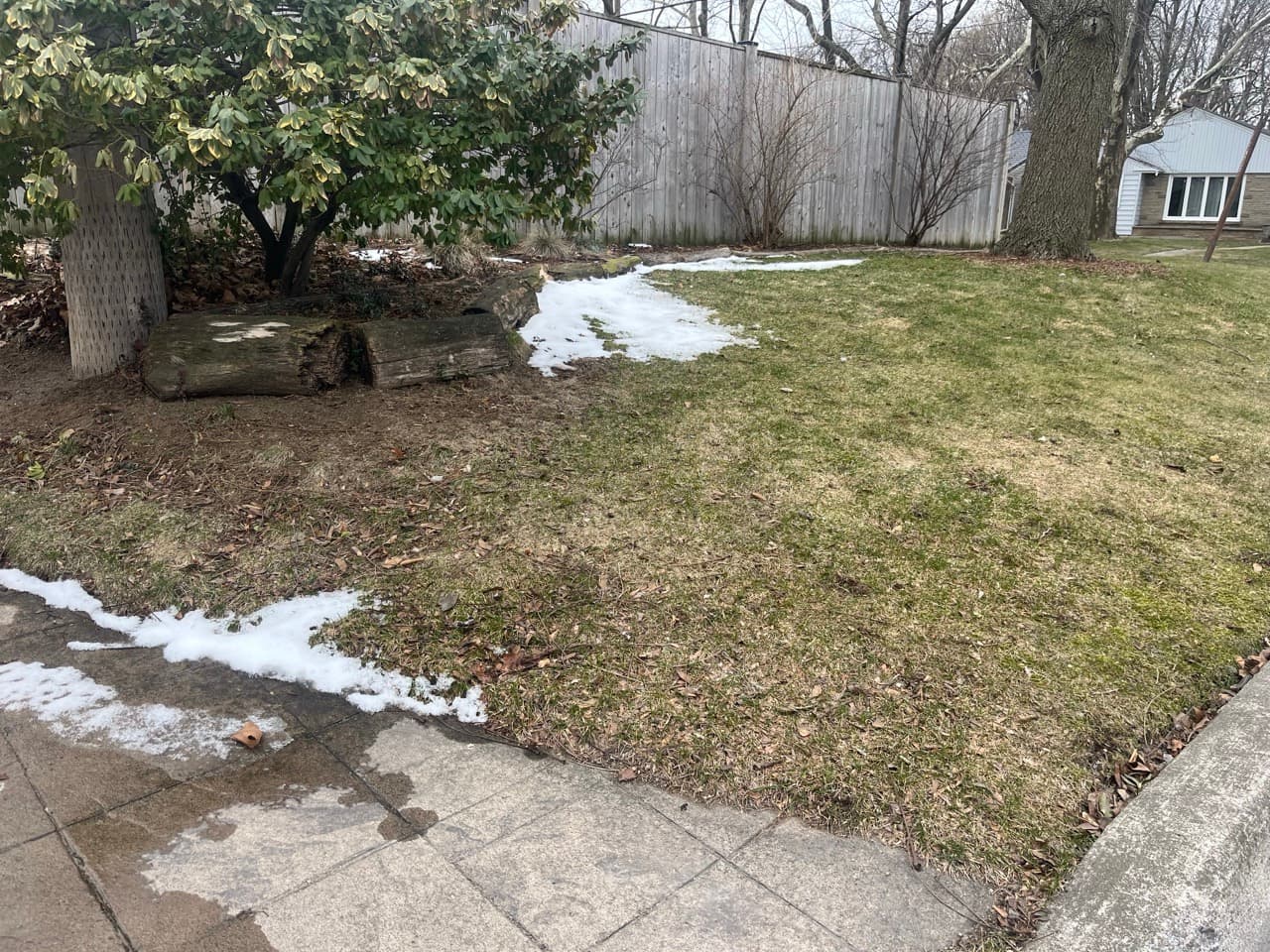
If your lawn looks rough coming out of winter, you're not alone. St. Catharines sits in one of the snowiest corridors in Ontario — the Niagara Peninsula regularly sees heavy snowfall, freeze-thaw cycles, and prolonged ground frost that can do serious damage to turfgrass. The good news: most of it is recoverable. The key is knowing what you're looking at and acting at the right time.
Why St. Catharines Winters Are Hard on Lawns
The Niagara region experiences what climatologists call a humid continental climate — cold winters with significant precipitation, often alternating between snow, ice, and above-freezing temperatures. According to Environment and Climate Change Canada, St. Catharines averages over 130 cm of snowfall annually, with frequent thaw events throughout January and February.
This freeze-thaw cycle is particularly damaging to turf. When soil freezes and thaws repeatedly, it expands and contracts — physically disrupting root systems and creating uneven ground. Add road salt drift, heavy snowpack, and reduced light exposure, and you have a recipe for a stressed, damaged lawn come April.
The Most Common Types of Winter Lawn Damage
Snow Mould
Snow mould is arguably the most common post-winter lawn problem in St. Catharines. It appears as circular, matted patches of grey or pink fungus — typically visible once the snow melts. There are two types:
- Grey snow mould (Typhula blight): Affects only the leaf tissue. Usually recovers on its own with raking and airflow.
- Pink snow mould (Microdochium patch): More aggressive — it can damage the crown and roots, requiring more intervention.
The University of Guelph Turfgrass Institute notes that snow mould thrives under dense, wet snowpack on unfrozen ground — exactly the conditions Niagara sees in early winter before a hard freeze sets in.
What to do: Lightly rake affected areas to break up matted grass and improve airflow. Avoid walking on it while it's still wet. In most cases, the lawn will fill in on its own as temperatures rise.
Frost Heaving
Frost heaving occurs when soil moisture freezes and expands, pushing grass roots up and out of the ground. You'll notice it as small mounds, spongy or uneven turf, or in severe cases, exposed root crowns.
This is especially common in areas with clay-heavy soil — which is prevalent throughout much of the Niagara region. Ontario's Agricultural Information Atlas shows that soils in the St. Catharines area tend toward clay loam, which retains more moisture and is more susceptible to heaving.
What to do: Once the ground has fully thawed, lightly roll or firm affected areas. Overseed any spots where roots were exposed. Avoid heavy traffic on heaved areas until the soil has settled and dried.
Salt Damage
If your lawn borders a roadway, driveway, or sidewalk, there's a good chance it's taken some salt damage over winter. Salt (sodium chloride) draws moisture out of grass and soil, essentially dehydrating the turf. It also disrupts the soil's ability to absorb water and nutrients.
Salt damage typically shows up as brown or straw-coloured grass in strips along pavement edges. It can look similar to winterkill, but the pattern — consistently along hardscaped edges — is the giveaway.
What to do: Flush affected areas thoroughly with water early in spring to dilute salt concentration. Topdress with compost to help restore soil structure. Overseed bare patches once the soil has warmed to at least 10°C. The Canadian Nursery Landscape Association recommends gypsum applications to help displace sodium in salt-damaged soils.
Winterkill
Winterkill is a general term for grass that has died due to winter conditions — whether from desiccation (drying out from cold wind and sun exposure), crown freeze, or ice sheets trapping gases in the turf. It's most common on exposed, elevated areas of a lawn that don't retain snow cover.
Unlike dormant turf, which will green up in spring, winterkilled grass won't recover. Tug gently on affected blades — if they pull up easily with no resistance, the roots are gone.
What to do: Rake out dead material, aerate, and overseed. For large bare areas, topdressing with a thin layer of quality topsoil before seeding improves germination rates significantly.
When to Start Spring Lawn Recovery in St. Catharines
Timing matters. Starting too early — when the soil is still saturated and soft — can compact the ground and do more harm than good.
As a general rule for the Niagara region:
- Early April: Assess damage. Light raking only.
- Mid-April: Begin dethatching and aeration once the soil has firmed up.
- Late April to early May: Ideal window for overseeding. Soil temperatures in St. Catharines typically reach 10°C around this time, which is the minimum threshold for cool-season grass germination.
- May: First fertilizer application of the season.
You can track local soil temperature data through Weather Underground's personal weather station network, which has several active stations in the St. Catharines area.
A Note on Soil Health
Winter damage is often compounded by poor soil health going into the cold months. Compacted, nutrient-depleted, or pH-imbalanced soil has less capacity to protect roots and recover quickly in spring.
If your lawn struggles every spring, a soil test is a worthwhile investment. Agri-Food Laboratories in Ontario offer residential soil testing for around $30–$50 and can tell you exactly what your lawn needs — not just for spring recovery, but for long-term resilience.
The Bottom Line
Winter in St. Catharines is hard on turf — but most lawns can recover fully with the right approach. The key steps are: identify what type of damage you're dealing with, wait for the right conditions before working the soil, and address the underlying issues (compaction, thatch, pH, drainage) so next winter does less damage.
A lawn that goes into winter healthy and well-prepared will almost always come out of it in better shape. That's worth keeping in mind as you plan your fall lawn care program too.